
Home / Pest Library / American Cockroaches
“Palmetto bugs” · Tampa Bay, Florida
American cockroaches: big, fast, and bad at boundaries.
“Palmetto bugs” are big, fast roaches that surge from sewers and mulch beds, then wander into kitchens and baths. We seal, dry, and bait smart. No blanket interior sprays.
Quick facts
- Danger
- Contaminate surfaces and food; shed skins and droppings can trigger allergies and asthma.
- Season
- Year-round in Florida; spikes in heat, high humidity, and after heavy rains.
- Common areas
- Kitchens, baths, laundry rooms, garages, floor drains; outdoors in meter boxes, mulch beds and palm debris.
Risk meter
How to spot one
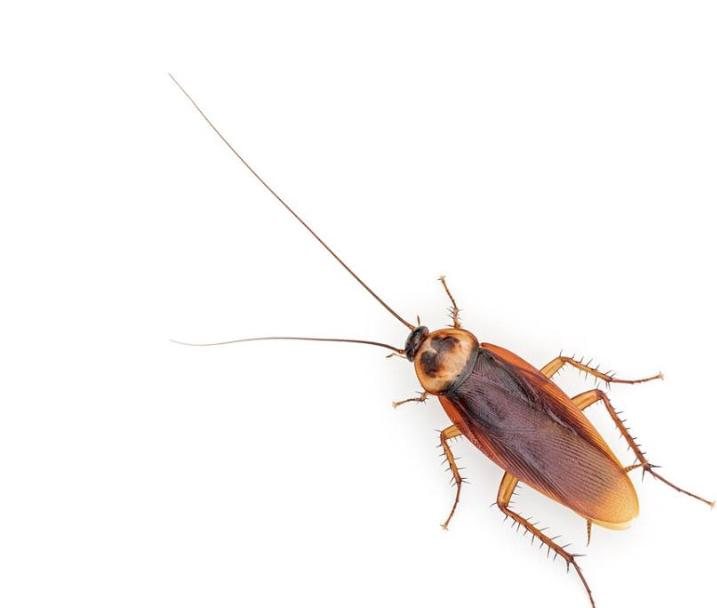
American cockroaches (Periplaneta americana) are large and reddish-brown, with a pale, yellowish band around the edge of the shield behind the head.[1] That’s the “figure-eight” look you’ll notice up close.
They thrive in warm, damp places like sewers, storm drains, and utility chases, and move indoors through gaps and drains, especially after storms. Mostly nocturnal, they feed on just about anything organic[1] and will glide or fly in warm weather, often toward lights.
UF researchers note they turn up in buildings all over Florida, especially commercial ones.[1] Translation: if you’ve seen one at a restaurant, you’ve met the neighborhood.
Signs of an infestation
- Nighttime sightings in kitchens, baths, laundry rooms, or garages
- Roaches emerging from floor drains, under door thresholds, or wall and soffit gaps
- Oothecae (oval brown egg cases), shed skins, and smears or fecal flecks in dark, damp areas
- A musty odor in heavy infestations, and an activity jump after heavy rain
Science says
Know thy enemy. Here’s what the entomologists have figured out about palmetto bugs.
Eggs in every “purse”
Females lay eggs in a hard, purse-shaped case called an ootheca, holding about 14 to 16 eggs, and tuck it into moist, hidden spots.[1]
Hatch, then a long adolescence
Baby roaches (nymphs) emerge from the egg case in about six to eight weeks, then take many more months to grow up.[1] That slow build is why one missed hiding spot can restart the whole party.
The biggest of the usual crowd
At about 4 centimeters on average, it’s the largest of the cockroaches that commonly live around people.[1] Their German cousins top out around ⅝ inch.[2]
Nature has a hit squad
Tiny parasitic wasps, including Aprostocetus hagenowii, attack American cockroach egg cases.[1] Yet another reason we skip broad sprays that knock out the good guys too.
Is it a palmetto bug or something else?
Florida has several look-alikes, and the right treatment depends on which one you’ve got. That’s why we always ID first.
| Roach | Adult size | Where it lives | What it means |
|---|---|---|---|
| American cockroach | About 1½ in[2] | Sewers, drains, mulch; wanders indoors | Seal entries, fix drains, bait smart |
| Florida woods cockroach | About 1¼ in[2] | Outdoors in leaf litter and mulch; relatively slow-moving[4] | Mostly an outdoor pest that wanders in |
| German cockroach | About ⅝ in[2] | Breeds indoors in kitchens and baths | An indoor infestation: needs a different plan, fast |
American cockroach control tips
- Install and maintain door sweeps; seal gaps at pipes, garage doors, and utility lines
- Keep P-traps wet; add a splash of mineral oil to seldom-used drains to slow evaporation
- Service floor drains with enzyme or foam cleaners; fit drain screens
- Store food (and pet food) in sealed containers; clean grease and crumbs under appliances
- Keep cardboard off garage floors; use sealed plastic bins
- Keep mulch thin and pulled back from the foundation; consider a gravel or rock border
- Tighten outdoor trash lids and rinse recyclables
- Remove palm fronds and leaf litter near the house
OrganoBug’s hybrid eco approach
Identify and map entry routes
Confirm American vs. other species; trace sewers, drains, utility penetrations, weep holes, door gaps, and exterior harborages.
Dry and clean first
Fix leaks, improve ventilation, service floor drains, and clean under and behind appliances.
Seal and exclude
Door sweeps, weather-stripping, sealed pipe gaps, screened weep holes and vents, tight drain screens.
Targeted, low-impact controls
Rotated gel baits in cracks and crevices, granular baits outside, growth regulators, and void dusts. No baseboard broadcasting.
Habitat reduction outdoors
Pull mulch 6 to 12 inches off the foundation, trim vegetation, clear palm debris, and secure trash.
Monitor, follow up, educate
Sticky monitors track results; we re-inspect in 2 to 3 weeks and leave you a simple drain-maintenance plan.
Frequently asked questions
Are American cockroaches dangerous?
They don’t bite, but they can contaminate surfaces and trigger allergies and asthma. Our program emphasizes sanitation and targeted controls.
Why do I see more after rain?
Rising water in sewers and drains pushes roaches to higher ground, often into buildings via gaps and floor drains.
Will you spray baseboards?
No. Broad interior sprays are less effective and less eco-friendly. We rely on bait rotations, growth regulators, void dusting, exclusion, and habitat fixes.
How are they different from German cockroaches?
American roaches are larger and tied to sewers and the outdoors; German roaches are small, kitchen-breeding indoor pests. We always ID first because strategies differ.
Can they fly?
Yes, they can glide or fly in warm temperatures, especially toward lights.
How fast will results show?
Expect activity to drop within days; full control typically stabilizes over 2 to 3 weeks with follow-ups and habitat corrections.
What keeps them from coming back?
Sealing entries, maintaining drains, habitat reduction outdoors, and periodic monitoring. We’ll set a simple maintenance plan for storm season.
Ready for palmetto-bug relief?
Book your American cockroach inspection. We’ll seal the gaps, fix the drains, and apply precise, eco-smart treatments that last.
Sources and photo credits
- Barbara, “American Cockroach, Periplaneta americana” (EENY-141 / IN298), UF/IFAS EDIS. edis.ifas.ufl.edu/publication/IN298
- UF/IFAS Extension, “Cockroaches” (IG082, from Pests in and around the Southern Home). edis.ifas.ufl.edu/publication/IG082
- UF/IFAS Entomology and Nematology, American cockroach photo gallery. entnemdept.ufl.edu
- Bibbs, “Florida Woods Cockroach, Eurycotis floridana” (IN915), UF/IFAS EDIS. edis.ifas.ufl.edu/publication/IN915
Photo: Insects Unlocked, University of Texas at Austin, released into the public domain (CC0) via Wikimedia Commons. Facts are summarized in our own words from the publications above. OrganoBug is not affiliated with or endorsed by the University of Florida.