Home / Pest Library / Rats

Roof rats and Norway rats · Tampa Bay, Florida

Rats in Tampa: we’ve got the city’s number.

Tampa ranks as Florida’s rattiest city on Orkin’s 2026 list.[4] Roof rats in the attic, Norway rats at ground level, and both chew wiring and spread germs. We seal, clean, and trap with precision, then keep watch with monthly or bi-monthly plans. Poisons only as a last resort.

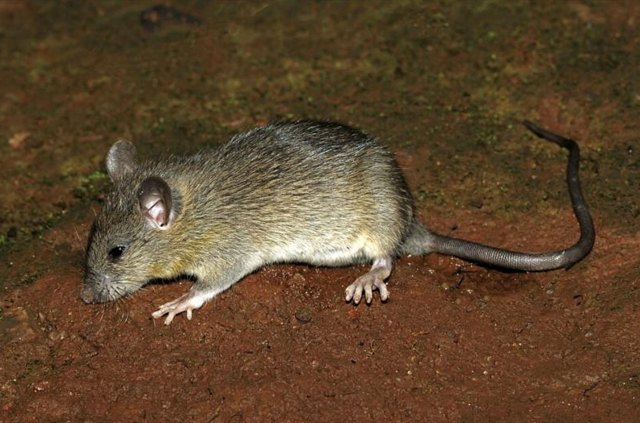
A roof rat with large ears and a tail longer than its body
Roof rat, Rattus rattus. Note the big ears and extra-long tail. Photo: David V. Raju (CC0), via Wikimedia Commons.

Quick facts

Danger
Food contamination; allergens from droppings and dander; gnawed wires and lines (fire and flood risks); parasites like fleas and mites.
Season
Year-round in Florida; pressure spikes after storms, construction, and brief cold snaps.
Common areas
Roof rats: attics, soffits, roof returns, palm and fruit trees, fences, utility lines. Norway rats: garages, crawlspaces, under sheds and decks, sewers, dense ivy, trash areas.
Treatment
Inspection, hard exclusion with chew-proof materials, sanitation, trap-first removal, HEPA cleanup, monitoring, and follow-ups. Rodenticides only if necessary, in locked exterior stations.

Risk meter

Nuisance Very high
Health High
Property High

Description and behavior

Tampa Bay’s main species is the roof rat (Rattus rattus), an agile climber that travels fence tops, cables, and tree canopies into attics. The Norway rat (Rattus norvegicus) is a heavier burrower that exploits ground-level gaps and trash areas.

Both are nocturnal, cautious, and prolific breeders. Grease rub marks along runways, gnawing on corners, and nighttime noise in attics or walls are typical. Roof rats favor fruit (citrus, bird seed), while Norway rats frequent dumpsters and ground harborage.

Signs of an infestation

  • Noises in the attic or walls at night; pets “staring” at baseboards
  • Droppings: roof rat droppings have pointed ends, Norway rat droppings are blunt
  • Dark rub marks on rafters, pipes, conduits, and fence tops
  • Gnawed entry holes around soffits, garage seals, A/C lines and pipe penetrations
  • Burrows under slabs and sheds; shredded nesting in insulation
  • Hollowed-out citrus still hanging on the tree
  • Odor or urine staining in heavy infestations

Roof rat or Norway rat?

It matters, because entry points and trap placement are completely different. Here’s how to tell them apart.

Roof rat

Rattus rattus

  • UF/IFAS calls it the worst and most abundant rodent pest in Florida.[1]
  • Slender, 12 to 14 inches long nose to tail, with a tail longer than its body.[1]
  • Lives in attics, roof spaces, palm trees, and shrubbery.[2]
  • Droppings about ½ inch, with pointed ends.
Tampa’s #1 rat

Norway rat

Rattus norvegicus

  • Heavier and shaggier, with a tail shorter than its body.
  • In Florida, most common along sea coasts and canals, especially where garbage isn’t stored well.[2]
  • Burrows under slabs, sheds, and along foundations.
  • Droppings about ¾ inch, with blunt ends.
Ground floor

Science says

Rats are smart, fast-breeding, and built to get in. Here’s what the University of Florida’s research shows.

½ in

The size of the door they need

Rats can squeeze through a crack just ½ inch wide.[2] That’s why sealing every gap matters more than any trap.

6 × 8

A year of babies

A roof rat has 6 to 8 young per litter and up to 6 litters a year, and reaches maturity in 3 to 5 months.[2]

365

No off-season in Florida

In Florida, roof rats breed year-round, with peaks in spring and fall.[1]

Daily

Teeth that never stop

Rodents gnaw every single day to keep their teeth short and sharp, including on wiring and beams.[2]

Prevention tips for Florida homes

  • Trim palm fronds and tree limbs 6 to 8 feet away from the roof; install tree guards where feasible
  • Cap and seal roof vents, gable vents, and soffit gaps with ¼-inch hardware cloth
  • Add door sweeps; weather-strip garage and entry doors; screen weep holes
  • Store food and pet food in hard, sealed containers; clean grease trays under grills
  • Pick up fallen citrus and fruit; manage bird feeders carefully
  • Keep outdoor trash tight-lidded; rinse recyclables
  • Fix leaks; insulate sweating pipes over wood and insulation

OrganoBug’s hybrid eco approach

  1. Identify and map

    Determine roof vs. Norway rat; trace runways (trees, fences, lines vs. burrows), food and water sources, and all active entry points.

  2. Seal first (exclusion)

    Close ½-inch and larger gaps with metal flashing, concrete patch, and copper or steel mesh plus sealant; install door sweeps, repair garage bottoms, and screen vents with ¼-inch hardware cloth.

  3. Sanitation and habitat fixes

    Tight-lid trash and recycling, pick up fallen fruit, re-bin bird seed and pet food, elevate storage, thin dense vegetation, and correct leaks.

  4. Trap-first removal

    Professional snap and multi-catch devices along mapped runways, in secured, child- and pet-conscious placements, adjusted to night activity.

  5. HEPA cleanup and deodorizing

    Remove droppings and nests safely, treat odor sources, and disinfect to reduce allergens and re-nesting cues.

  6. Monitor and verify

    Tracking patches and monitors, a proof-of-seal checklist, and monthly or bi-monthly visits to keep them out.

Rat control plans

Keep rats out, month after month.

Getting rats out is step one. Keeping them out is the real job. After your initial exclusion and cleanout, choose the ongoing plan that fits your home.

Recommended

Monthly rat plan

A visit every month

Best for active pressure, homes near water or fruit trees, and the first year after an infestation.

  • Professional trap stations checked, cleaned, and reset monthly
  • Exterior entry points re-inspected and sealed as needed
  • Activity tracking so we catch new pressure early
  • Free callbacks between visits
Get my rat plan quote

Bi-monthly rat plan

A visit every other month

Best for homes that have been sealed and are quiet, as ongoing protection.

  • Trap stations checked, cleaned, and reset every other month
  • Proof-of-seal check on roofline, vents, and penetrations
  • Storm and season check-ins when pressure spikes
  • Free callbacks between visits
Get my rat plan quote

Rat exclusion

One-time sealing project

The foundation for every plan: we close the doors rats use to get in.

  • Full inspection and entry-point map
  • Chew-proof sealing with metal flashing, hardware cloth, and mesh
  • Vent screens, door sweeps, and garage seals
  • Proof-of-seal checklist for your records
Get my rat plan quote

Not sure which plan you need? We’ll recommend one after your inspection, based on what we actually find.

Frequently asked questions

Is Tampa really that bad for rats?

Tampa ranks as Florida’s rattiest city on Orkin’s 2026 list.[4] Warm weather, fruit trees, palms, and water mean rats breed all year here.

Do you use poison?

Our standard is exclusion plus trapping. If bait is necessary, it’s used sparingly in locked exterior stations, never loose or broadcast indoors.

Is this safe for kids and pets?

Yes. Traps are secured and discreet; any bait (if required) is locked away. We provide clear access and re-entry guidance.

How long until they’re gone?

Most homes see sharp declines within 1 to 2 weeks, with complete resolution as sealing is finalized and remaining rats are removed.

What’s the difference between the monthly and bi-monthly plans?

Monthly plans suit homes with active pressure or high-risk surroundings. Bi-monthly plans suit sealed, quiet homes that need ongoing protection. Both include trap checks, seal checks, and free callbacks.

Will you clean the attic?

Yes. HEPA vacuuming, disinfecting, deodorizing, and optional insulation spot-replacement are available.

Roof rat or Norway rat: does it matter?

Absolutely. Entry points and device placements differ. We always ID first and tailor the plan.

Do electronic or ultrasonic repellers work?

They may shuffle activity briefly but don’t stop access or food sources. Seal plus trap is the lasting fix.

Ready for a rat-tight home?

We’ll seal every gap, remove the intruders, clean safely, and keep watch with a monthly or bi-monthly plan.

Sources and photo credits

  1. Kern, “Control of Roof Rats in Fruit Trees” (SSWEC120 / UW120), UF/IFAS EDIS. edis.ifas.ufl.edu/publication/uw120
  2. Koehler and Kern, “Rat and Mouse Control” (ENY-224 / DH044), UF/IFAS EDIS. edis.ifas.ufl.edu/publication/dh044
  3. UF/IFAS News, “UF/IFAS entomologist lists top eight invasive species that invade households” (2023). blogs.ifas.ufl.edu
  4. Orkin, 2026 Top 50 Rattiest Cities list, as reported by WKMG ClickOrlando, “Here is Florida’s most rat-infested city” (Oct. 22, 2026). clickorlando.com

Photo: David V. Raju, released into the public domain (CC0) via Wikimedia Commons. Facts are summarized in our own words from the publications above. OrganoBug is not affiliated with or endorsed by the University of Florida.