
Home / Pest Library / Mosquitoes
Asian tiger, yellow fever and Culex mosquitoes · Tampa Bay
Mosquitoes: Florida’s least favorite welcoming committee.
Relentless biters that breed in tiny pockets of water and thrive after summer rains. We cut populations at the source, so your yard, pool, and patio are usable again.
Quick facts
- Danger
- Painful, itchy bites; allergic reactions; disease risk (West Nile, dengue, Zika, chikungunya) in Florida.
- Season
- Active year-round; surges late spring through fall and 24 to 72 hours after rain or irrigation.
- Common areas
- Clogged gutters, birdbaths, plant saucers, bromeliads, toys, tarps, boats, yard drains, corrugated downspouts, pool cages, dense shrubs.
- Treatment
- Source reduction, larval control for water you can’t drain, targeted barrier applications to resting foliage, and monitoring.
Risk meter
Description and behavior
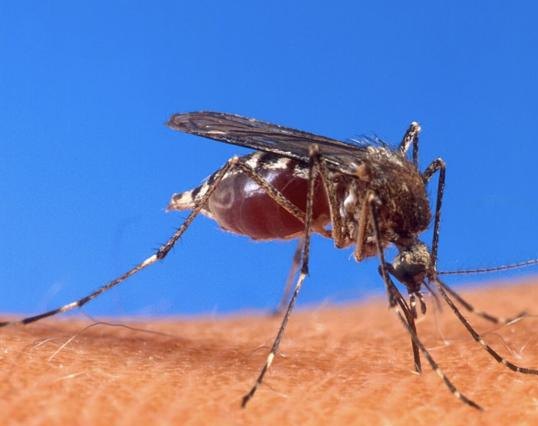
Tampa’s most common mosquitoes include Aedes aegypti and Aedes albopictus (aggressive day-biters that breed in small containers) and Culex species (dusk and dawn biters often linked to larger water sources).
Females lay eggs in as little as a bottle cap of water, and larvae (“wrigglers”) develop quickly in warm weather. Adults rest in dense, shaded vegetation and bite when you step outside, especially around sunrise, sunset, or on overcast days.
Signs of an infestation
- Frequent bites around patios, pool cages, or shaded walkways
- Visible larvae or pupae in standing water (birdbaths, buckets, plant trays)
- Swarms at dusk near shrubs, hedges, or under decks
- Mosquitoes resting on the shady side of buildings, fences, or foliage
Science says
Know the enemy, drain the enemy. Here’s what UF/IFAS mosquito researchers have found.
Invasive container breeders
The yellow fever mosquito and the Asian tiger mosquito are both exotic species that breed in containers in Florida, and they’re the most important carriers of dengue, chikungunya, and Zika.[1][2]
Eggs on a raft
Some mosquitoes lay rafts of more than 200 eggs, the whole raft about the size of a grain of rice.[2]
Why you scrub, not just dump
“Floodwater” eggs are laid on moist surfaces, need to dry out, then hatch when water returns.[2] Eggs stuck to the inside of a bucket can wait for the next rain.
Wriggler to biter
Larvae shed their skin four times before becoming pupae, which can’t feed and must breathe at the surface.[2] That water-bound stage is the best time to stop them.
Prevention tips for Florida homes
- Drain standing water weekly: plant saucers, buckets, toys, tarps, boat and grill covers, tires
- Clean gutters and downspouts often; replace corrugated extensions or use smooth-walled styles
- Keep pools and spas filtered and chlorinated; cover tightly or run circulation during trips
- Refresh birdbaths and pet bowls every 2 to 3 days
- Flush bromeliads and planters weekly
- Scrub the insides of containers, not just dump them, to remove eggs
OrganoBug’s hybrid eco approach
Inspect and map sources
Identify containers, drains, vegetation density, and resting sites (day vs. dusk pressure).
Source reduction
Empty containers, fix trouble spots, clean gutters, adjust irrigation, and recommend drain fixes.
Larval control
Treat water you can’t drain (sumps, yard drains, water features) to stop mosquitoes before they fly.
Targeted barrier applications
Reduced-impact micro-applications to shaded resting foliage, fence lines, and leaf undersides. No blanket fogging.
Pollinator-safe practices
Avoid blooms, treat in cool hours when bees aren’t foraging, and use low-drift methods.
Monitor and adjust
Proactive visits through peak season and pre-event service for weddings and backyard parties.
Frequently asked questions
Can you eliminate mosquitoes completely?
Total elimination outdoors isn’t realistic, but reducing breeding sites, larval control, and targeted barriers can dramatically cut bites.
How long does a treatment last?
Barrier applications typically provide relief for about 3 to 4 weeks, depending on weather, irrigation, and landscaping. Heavy rain may warrant touch-ups.
Are treatments safe for kids, pets, and bees?
We prioritize source reduction and larval control, then apply targeted, reduced-impact products away from blooms when pollinators are inactive.
Do citronella candles work?
They offer very limited, short-range relief. Source control and professional treatment are far more effective.
Why are mosquitoes worse after it rains?
Rain creates new breeding pockets. Eggs can hatch and become biting adults in as little as a week in warm weather.
I have corrugated drain pipes. Are they a problem?
Yes. The ridges hold water and eggs. We can treat, flush, or recommend smooth-wall alternatives.
Should my HOA or neighbors be involved?
Neighborhood coordination magnifies results by addressing shared drains, swales, and retention areas.
Take your backyard back
Tampa Bay and nearby. If they come back, we come back free.
Sources and photo credits
- Lounibos and Buckner, “Florida Container Mosquitoes” (ENY-2057 / IN1315), UF/IFAS EDIS. edis.ifas.ufl.edu/publication/IN1315
- UF/IFAS EDIS, “Mosquitoes and Their Control: Integrated Pest Management for Mosquito Reduction around Homes and Neighborhoods” (IN1045). edis.ifas.ufl.edu/publication/IN1045
- UF/IFAS EDIS, “Yellow Fever Mosquito, Aedes aegypti” (EENY-434 / IN792). edis.ifas.ufl.edu/publication/IN792
Photo: U.S. Department of Agriculture, public domain, via Wikimedia Commons. Facts are summarized in our own words from the publications above. OrganoBug is not affiliated with or endorsed by the University of Florida.