
Home / Pest Library / Chinch Bugs
Southern chinch bug · St. Augustinegrass · Tampa Bay
Chinch bugs: tiny, thirsty, and very into your lawn.
(Often misspelled “cinch bugs.”) Tiny sap-suckers that turn St. Augustine lawns brown fast, especially in hot, sunny spots. We use eco-smart methods to stop the damage and bring your turf back.
Quick facts
- Danger
- Rapid yellowing and browning that mimics drought; expanding dead patches in St. Augustinegrass.
- Season
- Active year-round in Tampa; worst late spring through fall, peaking in heat and drought.
- Common areas
- Sunny, dry edges along sidewalks and driveways, curb strips, south and west exposures, thatchy lawns with poor irrigation coverage.
- Treatment
- Source correction (irrigation and thatch), targeted spot treatments with reduced-impact products, resistance-smart rotations, beneficial nematodes where appropriate, and follow-up monitoring. No blanket, broad-spectrum sprays.
Risk meter
Description and behavior
The southern chinch bug feeds in the thatch layer of St. Augustinegrass, piercing blades and sucking sap. Feeding blocks water movement, causing yellowing that quickly turns straw-brown.
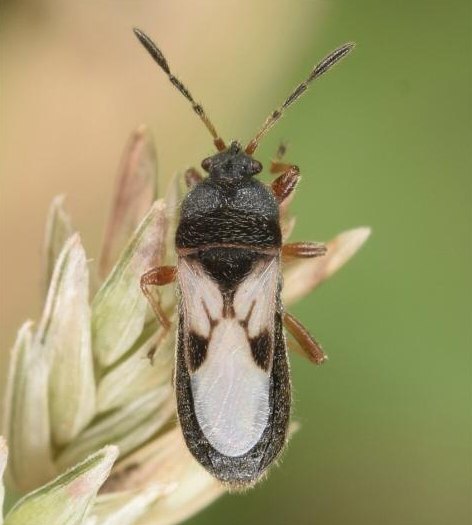
Nymphs are red-orange with a white band; adults are small and black with white wings. Populations explode in hot, dry weather and often start along pavement and compacted areas.
Signs of an infestation
- Irregular yellow or bronze patches that spread despite watering
- Damage starting near pavement, patios, or the sunniest parts of the yard
- Live insects in the thatch (try a soapy-water flush or the coffee-can float test)
- Grass that looks drought-stressed but doesn’t green up after deep watering
Science says
St. Augustinegrass is Florida’s favorite lawn, and that makes this little bug a very big deal.
St. Augustine’s worst enemy
UF/IFAS calls the southern chinch bug the most damaging insect pest of St. Augustinegrass in the United States.[2]
A costly little critter
Its taste for St. Augustinegrass has made it the second most expensive plant-feeding pest in Florida.[1]
It comes back to the scene
Spring infestations often start right where last season’s damage stopped.[1] Early checks of old hot spots pay off.
Prevention tips for Florida homes
- Mow right: keep St. Augustine at 3.5 to 4 inches; never remove more than a third of the blade
- Water deeply, not daily: ¾ to 1 inch per cycle, early morning; fix dry “missed” zones
- Reduce thatch: periodic dethatching and top-dressing; improve soil biology where appropriate
- Soften heat-trap edges along pavement with mulch or groundcover; relieve compaction
- Fertilize wisely: avoid heavy summer nitrogen; use slow-release and soil tests
- Watch early: check sunny curb strips weekly in warm months; call at the first yellowing
OrganoBug’s hybrid eco approach
Identify and map hot spots
Confirm chinch bugs (not fungus or irrigation issues) and mark progression, with simple float or flush tests if needed.
Fix the conditions first
Improve irrigation coverage, set proper mowing height, reduce thatch and compaction, and correct heat-trap edges.
Targeted, low-impact treatments
Spot-treat active zones with reduced-risk products labeled for chinch bugs; protect beneficials by avoiding blanket applications.
Biological options
Beneficial nematodes or microbial tools in suitable areas, timed for the best soil temperature and moisture.
Resistance-smart rotations
Rotate modes of action and limit frequency to keep treatments effective long-term.
Follow up and adjust
Re-inspect, re-treat hot spots if needed, and set a seasonal plan to prevent rebound.
Frequently asked questions
Are chinch bugs harmful to people or pets?
No. They don’t bite people or pets. The risk is rapid lawn damage and costly re-sodding if untreated.
How do I know it isn’t a fungus or drought?
Chinch bug areas stay brown despite proper watering and often start by pavement. We verify with a quick thatch inspection or flush test.
Do you blanket spray the lawn?
No. We use targeted, reduced-impact spot treatments to protect beneficial insects and pollinators.
How fast will the lawn recover?
Green-up begins in 1 to 3 weeks once feeding stops and irrigation is corrected. Severely damaged patches may need plugs or sod.
Why is my lawn hit every summer?
Heat, thatch, and dry edges create perfect conditions. Cultural fixes plus resistance-smart eco treatments break the cycle.
Can I prevent chinch bugs naturally?
Healthy turf helps: proper height, irrigation coverage, thatch reduction, and soil improvement. Beneficial nematodes can suppress outbreaks.
Will treatments affect bees or butterflies?
Our program avoids blooms, focuses on thatch and soil in hot spots, and uses low-impact options.
Do you service HOAs and large properties?
Yes. Mapping irrigation issues and coaching crews on mowing and watering amplifies results across shared landscapes.
Let’s get your lawn green again
We’ll confirm the culprit, fix the conditions, and treat only where the bugs actually are.
Sources and photo credits
- Woods, “Southern Chinch Bug, Blissus insularis” (EENY-226 / IN383), UF/IFAS EDIS. edis.ifas.ufl.edu/publication/IN383
- Buss, Whitman and Dale, “Managing Southern Chinch Bug in Warm Season Turfgrasses” (ENY-325 / LH036), UF/IFAS EDIS. edis.ifas.ufl.edu/publication/LH036
Photo: Christina Butler, CC BY 2.0, via Wikimedia Commons. Facts are summarized in our own words from the publications above. OrganoBug is not affiliated with or endorsed by the University of Florida.