
Home / Pest Library / Fleas
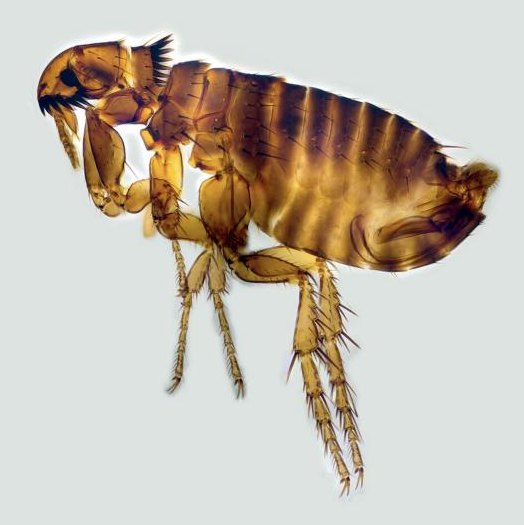
Cat flea · Ctenocephalides felis · Tampa Bay
Fleas: small jumpers, big itch energy.
Itchy, persistent, and stressful for families and pets. We break the flea life cycle with eco-smart, whole-home and yard strategies. No foggers or blanket interior sprays.
Quick facts
- Danger
- Itchy bites; flea allergy dermatitis in pets and people; tapeworm transmission in pets; skin infections from scratching.
- Season
- Year-round in Florida; spikes late spring through fall and after moves, adoptions, or kennel stays.
- Common areas
- Pet beds and resting zones, carpets and rugs, couch seams, baseboards, under furniture, car seats, shady yard strips, under decks, fence lines, kennels and coops.
- Treatment
- Inspection, HEPA vacuuming and targeted steam, reduced-impact crack-and-crevice applications with insect growth regulators (IGRs), desiccant dusts in voids, outdoor habitat reduction, beneficial nematodes where appropriate, and scheduled follow-ups.
Risk meter
Description and behavior
The cat flea (the most common one here, on dogs too) develops from egg to larva to pupa to adult, mainly in pet resting areas and carpet edges.
Pupae can “wait” inside cocoons and emerge when they sense heat or vibration, which is why fleas seem to appear suddenly after cleaning or moving in. Outdoors, fleas favor shaded, humid spots with organic debris and wildlife traffic.
Signs of an infestation
- Pets scratching or biting; flea dirt (pepper-like specks) on skin or bedding
- Small, fast fleas on your socks after walking across carpet
- Bites on ankles and legs; clusters after moving into a vacant home
- Specks on sheets, pet beds, or under cushions; larvae in carpet edges
Science says
Here’s why fleas are so hard to beat on your own, straight from UF entomologists.
An egg every hour
Cat fleas lay eggs at a rate of up to one per hour.[1] The eggs roll off your pet and into the carpet.
Adults are the tip of the iceberg
Adults are the only stage that lives on the pet.[1] Eggs, larvae, and pupae are in your home and yard.
The larvae’s favorite snack
Larvae feed mostly on dried adult flea feces, the “flea dirt” you see on bedding.[1]
Why treating the pet alone fails
UF/IFAS notes that removing fleas from the animal alone is futile, because new adults keep developing off the pet and jumping on.[1]
Prevention tips for Florida homes
- Treat pets year-round per your vet; keep doses on schedule
- Wash pet beds, throw blankets, and slipcovers hot and dry on high weekly during outbreaks
- Vacuum edges and cushions 3 to 4 times a week at first; empty the canister outside
- Yard hygiene: remove leaf litter, clean under decks and kennels, trim vegetation along fence lines
- Wildlife control: secure trash, block crawlspace and porch gaps, avoid feeding feral animals
- After boarding or adoption, launder items on high heat and inspect carriers and car upholstery
OrganoBug’s hybrid eco approach
Confirm and map hot spots
Identify fleas (not mites) and locate pet zones, couch seams, carpet edges, kennels, and shady yard strips.
Mechanical control first
HEPA vacuum seams, edges, baseboards, and upholstery; high-temperature steam on seams, tufts, and cracks.
Targeted, low-impact applications
Reduced-risk products plus IGRs to disrupt development; desiccant dusts in hidden voids. No foggers or whole-room aerosols.
Outdoor habitat fixes
Thin dense shrubs, rake leaf litter, open airflow under decks, and treat pet resting zones and fence lines, never blooms.
Biological tools and pet coordination
Beneficial nematodes in suitable soils, synced with your vet’s year-round preventives.
Follow-ups and the pupa window
Re-inspect and touch up at about 10 to 14 days to catch adults emerging from pupae, until activity stops.
Frequently asked questions
Will one visit solve it?
Usually 2 to 3 targeted visits are needed because of the pupa stage. Each visit pushes activity down until it clears.
Are treatments safe for kids, pets, and pollinators?
Yes. We lead with vacuuming and steam and use precise, reduced-impact products away from blooms, with re-entry guidance once areas are dry.
Why do I still see fleas after service?
Pupae can keep emerging for 1 to 2 weeks. Vacuuming, IGRs, and follow-ups knock down new adults as they hatch.
Do foggers (bug bombs) help?
Foggers rarely reach eggs and larvae in crevices and can spread residues. Targeted professional methods are safer and more effective.
Will I need to throw out furniture?
Almost never. With steam, vacuuming, and precise treatments, most items can be saved.
Can you treat chicken coops and kennels?
Yes, using pet-conscious, reduced-impact methods, scheduled so animals are out until areas are dry.
How do we keep them from coming back?
Year-round pet prevention, routine vacuuming, yard hygiene, wildlife exclusion, and seasonal checkups keep pressure low.
Ready for relief?
We’ll target the hidden stages, tune the yard, and stay until the scratching stops.
Sources and photo credits
- Zentko and Richman, “Cat Flea, Ctenocephalides felis (Bouché)” (EENY-005 / IN137), UF/IFAS EDIS. edis.ifas.ufl.edu/publication/IN137
Photo: Sam Thomas, CC BY-SA 2.0, via Wikimedia Commons. Facts are summarized in our own words from the publications above. OrganoBug is not affiliated with or endorsed by the University of Florida.