
Home / Pest Library / Mice
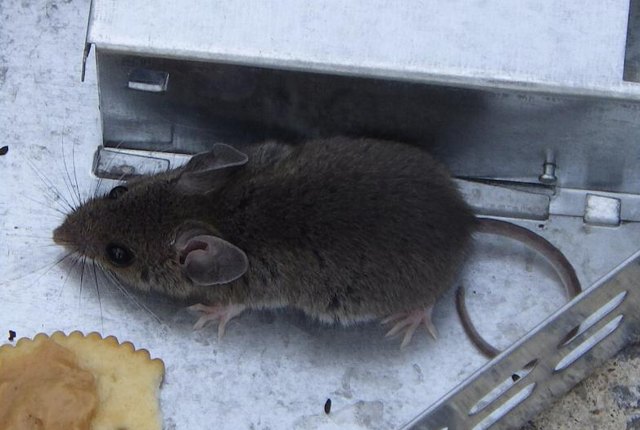
House mouse · Mus musculus · Tampa Bay
Mice: tiny, cute, and absolutely not welcome.
Tiny, resourceful climbers that squeeze through ¼-inch gaps and thrive on crumbs and clutter. We seal, clean, and trap with precision. Poisons only as a last resort.
Quick facts
- Danger
- Food contamination; allergens from droppings and dander; gnawing on wires and insulation that can create fire risks.
- Season
- Year-round indoors in Florida; pressure spikes after construction, heavy rains, and brief cold snaps.
- Common areas
- Kitchens, pantries, laundry and utility rooms, garages, attics, under appliances, cabinet voids, wall and ceiling chases, around water heaters and A/C air handlers.
- Treatment
- Inspection and exclusion (seal ¼-inch gaps with chew-proof materials), sanitation, trap-first removal, HEPA droppings cleanup and disinfecting, monitoring, and follow-ups. Rodenticides only if necessary, in locked stations.
Risk meter
Description and behavior
The house mouse is the most common indoor rodent here. They’re nocturnal, extremely agile, and can run along wires and squeeze through openings as small as a pencil.
Mice nest close to food and water: inside appliance cavities, wall voids, and stored boxes. With multiple litters a year, small issues become infestations quickly. Grease rub marks, gnawing, and nighttime scratching in walls are typical.
Signs of an infestation
- Rice-sized, pointed droppings along walls, in cabinets, or under sinks
- Scratching in walls or ceilings at night; sudden pet interest at baseboards
- Gnaw marks on pantry goods, wiring, or plastic lines; shredded paper or insulation nests
- Grease rub marks on runways; urine odor in closed spaces
Science says
Mice are small, but the numbers add up fast. Here’s the University of Florida’s data.
Prevention tips for Florida homes
- Seal ¼-inch gaps at doors (add door sweeps) and around pipes, cables, and A/C lines
- Store food and pet food in hard, sealed containers; clean under and behind appliances
- Swap cardboard for sealed plastic bins; keep items off garage floors
- Fix plumbing drips; insulate sweating lines; keep sinks dry overnight
- Trim vegetation 12 to 18 inches off the house; screen weep holes and vents
- Keep outdoor trash tight-lidded; clean grill grease trays; manage bird seed and compost
OrganoBug’s hybrid eco approach
Identify and map
Locate entry points, runways, nest sites, food and water sources, and clutter.
Seal first (exclusion)
Close ¼-inch and larger gaps with copper or steel mesh and sealant, metal flashing, door sweeps, and penetration seals.
Sanitation and food control
Sealed pantry storage, leak fixes, and less cardboard and clutter.
Trap-first removal
Professional snap and multi-catch traps in lockable stations along runways, placed with kids and pets in mind.
HEPA cleanup and disinfecting
Safe removal of droppings and nests with HEPA filtration and disinfectants to prevent re-nesting.
Monitor and verify
Monitors as needed, then close out with a proof-of-seal checklist. Ongoing rodent plans available.
Frequently asked questions
Do you use poison?
Exclusion and trapping are our standard. If bait is necessary, we use locked, tamper-resistant stations in select areas, never loose bait.
Is this safe for kids and pets?
Yes. Traps are secured and discreet; any bait is in locked stations. We provide clear re-entry and housekeeping guidance.
How long until they’re gone?
Most homes see sharp declines within 1 to 2 weeks, with complete resolution as we finish sealing and remove survivors.
Will you clean droppings?
Yes. HEPA vacuuming, disinfecting, and deodorizing are part of our service.
What’s the difference between mice and rats?
Mice are smaller with smaller droppings and usually nest near kitchens. Rats need heavier exclusion and different trap placement. We ID first.
Do electronic repellers work?
They may shift activity briefly but don’t solve access or food sources. Exclusion and trapping is the reliable fix.
Ready for a mouse-tight home?
We’ll seal every gap, remove the intruders, clean safely, and set you up for long-term protection.
Sources and photo credits
- Koehler and Kern, “Rat and Mouse Control” (ENY-224 / DH044), UF/IFAS EDIS. edis.ifas.ufl.edu/publication/DH044
Photo: Ahunt, released into the public domain (CC0), via Wikimedia Commons. Facts are summarized in our own words from the publications above. OrganoBug is not affiliated with or endorsed by the University of Florida.