
Home / Pest Library / Silverfish
Silverfish and firebrats · Tampa Bay
Silverfish: little bookworms with a humidity habit.
Paper-, fabric-, and glue-eating night crawlers that love humidity. We fix moisture and hidden hiding spots first, then use precise, low-impact methods to clear them out.
Quick facts
- Danger
- No bites or disease; the main risk is damage to books, photos, wallpaper, clothing, and stored goods.
- Season
- Year-round in Florida; pressure rises with humidity, leaks, and poorly vented attics and baths.
- Common areas
- Bathrooms, kitchens, laundry rooms, closets, attics, garages, baseboards, cardboard boxes, stored files, bookcases, and around water heaters.
- Treatment
- Moisture control and sanitation, sealing entry points, targeted crack-and-crevice work with desiccant or borate dusts, judicious reduced-impact residuals where needed, and monitoring. No blanket interior sprays.
Risk meter
Description and behavior
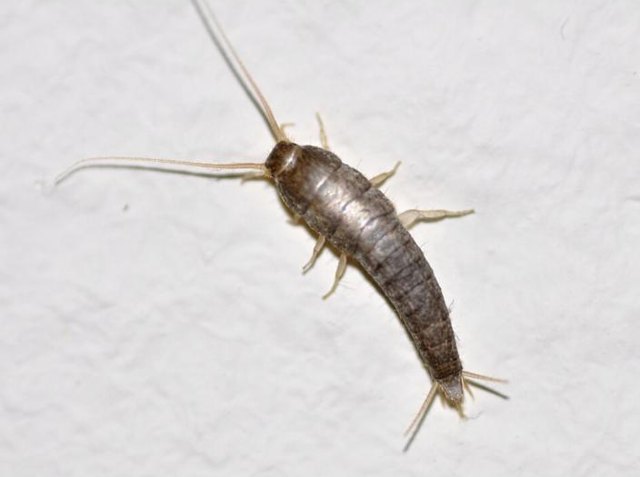
Silverfish are fast, flat, silver-gray insects that run rather than fly. They feed on starches and proteins: book bindings, cardboard glue, wallpaper paste, flour, cereal dust, linens, and stored clothing.
Firebrats, their heat-loving cousins, thrive in very warm spots like attic insulation or near water heaters. Activity is mostly nocturnal and usually tied to moisture problems or cluttered storage.
Signs of an infestation
- Irregular, scraped or “etched” edges on paper, photos, boxes, or wallpaper
- Tiny pepper-like specks and faint yellow stains on shelves or in boxes
- Shed scales and skins; live insects scurrying when lights come on
- Damage to starched fabrics, linens, or stored clothing
Science says
Silverfish are some of the oldest insect designs on Earth, and they’re built to outlast you.
Prevention tips for Florida homes
- Run bath fans during and after showers; vent them outside, not into the attic
- Use a dehumidifier where humidity tops 50%; improve attic airflow
- Repair plumbing drips; insulate sweating pipes
- Store papers, photos, and fabrics in sealed plastic bins instead of cardboard
- Keep pantry items in tight containers; wipe up flour and cereal dust
- Reduce clutter along baseboards and closets; vacuum edges regularly
- Seal gaps at baseboards, door thresholds, and pipe penetrations
OrganoBug’s hybrid eco approach
Identify and map
Confirm silverfish vs. firebrats; locate moisture sources, heat pockets, and storage hot spots.
Fix conditions first
Dehumidifiers and venting, leak repair, better bath and attic ventilation, and smarter paper storage.
Seal and exclude
Caulk gaps along baseboards, around pipes, and at cabinet penetrations; weather-strip attic accesses.
Targeted, low-impact treatments
Desiccant and borate dusts in cracks, voids, closet perimeters, and attic harborage. No blanket sprays.
Monitors and sanitation
Sticky monitors to verify reduction; sealed bins instead of cardboard.
Follow up and adjust
Re-inspect, treat remaining pockets, and set a humidity and monitoring plan.
Frequently asked questions
Are silverfish harmful to people or pets?
No. They don’t bite or spread disease; they damage belongings.
What’s the difference between silverfish and firebrats?
Firebrats prefer hotter spots like attics and utility rooms. Treatment is similar, but we focus more on heat-source harborages.
Will sprays alone solve the problem?
Rarely. Moisture and clutter drive infestations. We pair condition fixes with targeted, low-impact treatments.
How long until they’re gone?
You’ll see reductions within 1 to 3 weeks as harborages dry and treated voids take effect; follow-ups catch stragglers.
Are your methods safe for kids, pets, and belongings?
Yes. We emphasize moisture control, sealing, and precise use of desiccants and borates in hidden areas.
Do I need to toss books or photos?
Usually not. Move them to sealed bins, reduce humidity, and we’ll treat the surrounding harborages.
Can they come from the attic?
Yes, especially with high heat and humidity. We inspect attic access points and insulation edges.
Protect your books, photos, and closets
We’ll fix the conditions, target hidden harborages, and keep your home dry and silverfish-free.
Sources and photo credits
- Oi, Koehler, Branscome and Bayer, “Booklice and Silverfish” (ENY-225 / IG094), UF/IFAS EDIS. edis.ifas.ufl.edu/publication/IG094
- Phillips and Gillett-Kaufman, “Silverfish, Lepisma saccharina” (EENY-705 / IN1211), UF/IFAS EDIS. edis.ifas.ufl.edu/publication/IN1211
Photo: Aiwok, CC BY-SA 3.0, via Wikimedia Commons. Facts are summarized in our own words from the publications above. OrganoBug is not affiliated with or endorsed by the University of Florida.