
Home / Pest Library / Squirrels
Eastern gray and southern flying squirrels · Tampa Bay
Squirrels: adorable in the oak tree, chaos in the attic.
Roof runners that turn soffit gaps into doors and attics into nurseries. We humanely evict, seal, and clean. No poisons, no gimmicks, just lasting exclusion.
Quick facts
- Danger
- Chewed wiring (fire risk), shredded insulation, urine and odor, stained ceilings; fleas and ticks can hitchhike to pets.
- Season
- Year-round; attic nesting spikes late winter through spring and again in late summer.
- Common areas
- Eave and roof returns, soffit-roof joints, gable and ridge vents, chimney caps, attic louvers, warped fascia, dormer corners, A/C and utility penetrations; travel via fence tops, cables, and tree limbs.
- Treatment
- Humane one-way eviction, hard exclusion with chew-proof materials, nest removal and HEPA cleanup, odor sanitation, insulation touch-ups, and follow-up monitoring. Trapping only when required, always within Florida rules. No rodenticides.
Risk meter
Description and behavior
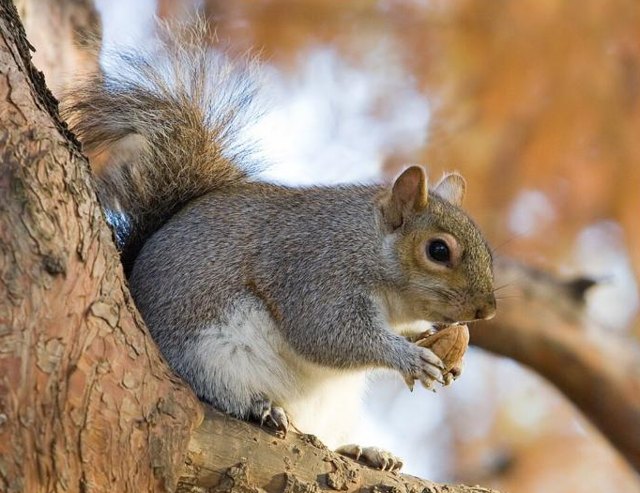
Tampa Bay sees eastern gray squirrels most often, with southern flying squirrels in some neighborhoods. Grays are active in the daytime and announce themselves with roof running and noisy dawn activity. Flyers are nocturnal and slip through small gaps to nest in insulation.
Both chew edges to widen openings, carry in leaves for nests, and favor routes from trees to rooflines.
Signs of an infestation
- Morning or evening running and scratching in the attic or soffits
- Chewed corners at eave returns, fascia, or plastic and ridge vents
- Leafy nests, droppings, or acorn shells in the attic
- Daylight visible through gaps; stained sheathing or insulation
- Pets fixating on one wall or ceiling area
Science says
Know your roommate. Here’s what Florida’s wildlife experts say about gray squirrels.
Florida’s squirrels
Florida is home to three squirrels: the eastern gray, the fox squirrel, and the southern flying squirrel.[2]
Litters a year
Eastern gray squirrels can have around two litters per year,[1] which is why attic activity comes in waves.
Built to climb anything
Their feet can turn backward, letting them climb headfirst down trees.[1] Your downspout is no challenge.
Prevention tips for Florida homes
- Keep tree limbs and palm fronds 6 to 8 feet away from the roof
- Cap chimneys; screen ridge, gable, and attic vents with chew-proof mesh
- Repair warped fascia and loose soffit panels; seal utility penetrations
- Use squirrel-resistant bird feeders and keep seed off the ground
- Store pet food and bird seed in hard, sealed containers
- Inspect eave returns after storms; wind can open re-entry points
OrganoBug’s hybrid eco approach
Identify and map
Confirm species and active entry points; check for babies and note runways from trees, fences, and lines.
Humane eviction
One-way excluders at the main exit so squirrels leave but can’t return. If pups are present, we time service for safe removal and reunification.
Hard exclusion and repairs
Metal flashing, hardware cloth, vent guards, chimney caps, and reinforced weak edges, not just patched holes.
Sanitation and remediation
Nest removal, HEPA vacuuming, enzyme deodorizer, and insulation touch-ups as needed.
Habitat adjustments
Limb trimming, smarter bird feeding, and metal collars on cable and pipe penetrations.
Monitor and warranty
Confirm a quiet attic and back the work with a seasonal warranty. If activity returns between visits, we come back free.
Frequently asked questions
Do you use poison?
No. Rodenticides are unsafe and ineffective for squirrels. We rely on humane eviction and durable exclusion.
What if there are babies?
We check for pups. If present, we time the eviction or safely remove and reunite them outside before sealing.
Will trapping be necessary?
Often no. One-way eviction plus sealing solves it. If trapping is needed, we do it legally and humanely under Florida regulations.
How fast will the noise stop?
Most homes go quiet within 24 to 72 hours after excluders are installed. Then we seal permanently and verify.
Can they chew back in?
Not through our reinforced seals. We use metal flashing and mesh, fix structural gaps, and warranty the work.
Do you clean the attic?
Yes. Nest removal, HEPA cleanup, odor control, and insulation touch-ups are part of our service.
Ready for a quiet attic?
We’ll humanely evict, seal every gap, clean the mess, and keep your attic peaceful year-round.
Sources and photo credits
- UF/IFAS Extension Sarasota County, “Stories of Gratitude for the World of Wildlife: The Eastern Gray Squirrel” (2023). blogs.ifas.ufl.edu
- Florida Fish and Wildlife Conservation Commission, “Eastern gray squirrel.” myfwc.com
Photo: Diliff, CC BY-SA 3.0, via Wikimedia Commons. Facts are summarized in our own words from the publications above. OrganoBug is not affiliated with or endorsed by the University of Florida.